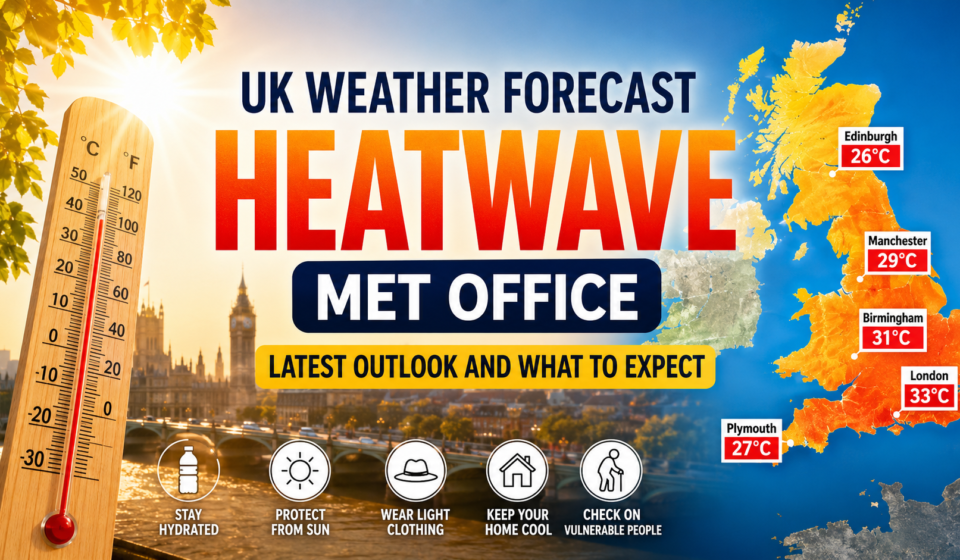

What Is the UK Weather Forecast Heatwave Met Office Outlook?
The UK weather forecast heatwave Met Office outlook combines advanced forecasting models, satellite observations, radar data, and atmospheric analysis to predict upcoming weather conditions.
When high pressure builds over western Europe and extends towards the UK, it often creates conditions for:
- Dry weather
- Long sunny spells
- Higher daytime temperatures
- Warm overnight conditions
- Reduced rainfall
Meteorologists continually update forecasts as new data becomes available, helping people prepare for changing weather conditions.
What Qualifies as a UK Heatwave?
Unlike many countries, the UK does not have one single temperature threshold.
Instead, the Met Office defines a heatwave as temperatures reaching or exceeding a location-specific threshold for at least three consecutive days.
These thresholds vary across the country because average summer temperatures differ between regions.
| Region | Typical Heatwave Threshold |
|---|---|
| Southern England | Around 28°C |
| Midlands | Around 27°C |
| Northern England | Around 26°C |
| Wales | Around 25°C |
| Scotland | Around 25°C |
| Northern Ireland | Around 25°C |
This regional approach provides a more accurate representation of unusually hot weather.
Why Are UK Heatwaves Becoming More Common?
Scientists have observed an increase in the frequency and intensity of warm weather events across the UK.
Several contributing factors include:
Climate Change
Long-term global warming is increasing the likelihood of hotter summers.
Persistent High Pressure
Large areas of high pressure can remain stationary for several days, allowing temperatures to rise steadily.
Warm Air from Europe
Hot continental air often moves northwards into Britain during summer.
Reduced Cloud Cover
More sunshine means greater daytime heating.
These factors sometimes combine to produce prolonged periods of hot weather.
Latest UK Weather Outlook
Current weather patterns often indicate a mixture of:
- Warm sunny spells
- Dry conditions in many areas
- Isolated afternoon showers
- Higher temperatures across southern regions
- Slightly cooler conditions in northern Scotland
Forecasters continue monitoring whether these warm periods become prolonged enough to meet official heatwave criteria.
Regional Forecast
South East England
Often experiences the highest temperatures during summer.
Expected conditions may include:
- Bright sunshine
- Very warm afternoons
- Light winds
- Limited rainfall
South West England
Generally warm with coastal breezes helping moderate temperatures near the sea.
Midlands
Warm and dry weather frequently develops under high pressure.
Some inland locations can become particularly hot.
Northern England
Temperatures usually remain slightly lower than southern regions but can still reach heatwave levels.
Scotland
Northern Scotland often remains cooler due to Atlantic influences.
Southern Scotland may experience warmer spells.
Wales
Warm sunshine is common, particularly inland.
Western coastal areas may benefit from cooling sea breezes.
Northern Ireland
Typically experiences more variable conditions but can still enjoy prolonged warm weather.
Expected Temperatures
Although temperatures vary daily, warm spells often produce:
| Area | Typical Highs |
| Southern England | 28–33°C |
| Midlands | 26–31°C |
| Wales | 24–29°C |
| Northern England | 24–30°C |
| Scotland | 22–28°C |
| Northern Ireland | 22–27°C |
Local variations depend on cloud cover, wind direction, and rainfall.
How Does the Met Office Predict Heatwaves?
Modern forecasting relies on multiple technologies.
Satellite Imagery
Satellites monitor cloud development, atmospheric moisture, and weather systems.
Weather Radar
Radar tracks rainfall and storm development.
Computer Models
Powerful forecasting models simulate atmospheric changes several days ahead.
Weather Stations
Thousands of observation sites across the UK provide real-time temperature, wind, rainfall, and humidity data.
By combining these sources, forecasters produce increasingly accurate predictions.
Health Risks During Hot Weather
Heat can affect everyone, but some people face greater risks.
These include:
- Older adults
- Young children
- Pregnant women
- Outdoor workers
- People with long-term medical conditions
Possible health effects include:
- Heat exhaustion
- Dehydration
- Sunburn
- Fatigue
- Heatstroke in severe cases
Tips for Staying Safe
Stay Hydrated
Drink water regularly throughout the day.
Keep Your Home Cool
Close curtains during the hottest hours.
Open windows when temperatures fall in the evening.
Avoid Peak Sunshine
The strongest sunshine usually occurs between late morning and mid-afternoon.
Wear Suitable Clothing
Choose:
- Loose clothing
- Light colours
- Breathable fabrics
Protect Your Skin
Apply sunscreen and wear sunglasses and a wide-brimmed hat when outdoors.
Impact on Travel
Hot weather can affect transport networks.
Possible disruptions include:
Rail
High temperatures may require temporary speed restrictions.
Roads
Soft road surfaces can become damaged.
Air Travel
Very hot conditions occasionally affect airport operations.
Drivers should also:
- Carry drinking water
- Check tyre pressures
- Monitor engine temperatures
Gardening During a Heatwave
Gardeners can help plants survive hot weather by:
- Watering early morning
- Watering in the evening
- Applying mulch
- Avoiding unnecessary lawn cutting
- Using collected rainwater where available
Container plants usually require more frequent watering.
Farming and Agriculture
Extended hot weather may affect:
- Crop growth
- Livestock welfare
- Soil moisture
- Irrigation demand
Farmers often adjust working hours to avoid the hottest parts of the day.
How Businesses Can Prepare
Businesses can reduce heat-related disruption by:
- Reviewing workplace ventilation
- Encouraging hydration
- Allowing flexible working where practical
- Checking cooling equipment
- Providing shaded rest areas
What Should Households Do Before a Heatwave?
Preparation can make hot weather more manageable.
Checklist:
- Stock bottled water
- Test electric fans
- Prepare light meals
- Check medicines are stored correctly
- Keep emergency contacts available
- Look after neighbours who may need assistance
Common Questions About UK Heatwaves
Why do temperatures differ across the UK?
Regional geography, altitude, coastal influences, and prevailing winds all affect local temperatures.
Can thunderstorms follow a heatwave?
Yes.
Warm, humid air sometimes creates unstable conditions leading to thunderstorms after prolonged heat.
Do overnight temperatures matter?
Absolutely.
Warm nights make recovery more difficult and increase health risks during extended hot weather.
Comparison: Normal Summer Weather vs Heatwave
| Feature | Typical Summer | Heatwave |
| Temperature | 20–25°C | 28°C+ in many areas |
| Rainfall | Regular showers | Often very limited |
| Sunshine | Mixed | Prolonged sunshine |
| Overnight temperatures | Cool | Noticeably warmer |
| Health risk | Low | Increased |
Practical Advice for Families
Families can stay comfortable by:
- Planning outdoor activities during cooler mornings.
- Keeping children hydrated.
- Never leaving pets or children in parked vehicles.
- Using fans responsibly while maintaining good ventilation.
- Checking on elderly relatives regularly.
Simple planning helps reduce the impact of prolonged hot weather.
Conclusion
The UK weather forecast heatwave Met Office outlook provides valuable guidance whenever hot weather is expected across the country. By understanding how heatwaves are forecast, recognising regional temperature differences, and following sensible precautions, individuals and businesses can better prepare for warmer conditions.
Although sunshine brings many opportunities to enjoy the outdoors, prolonged heat also requires careful planning. Staying hydrated, protecting yourself from the sun, monitoring vulnerable family members, and keeping up with the latest official forecasts can make a significant difference during periods of unusually high temperatures.
As UK summers continue to vary from year to year, remaining informed and prepared is the best approach to safely enjoying the season.