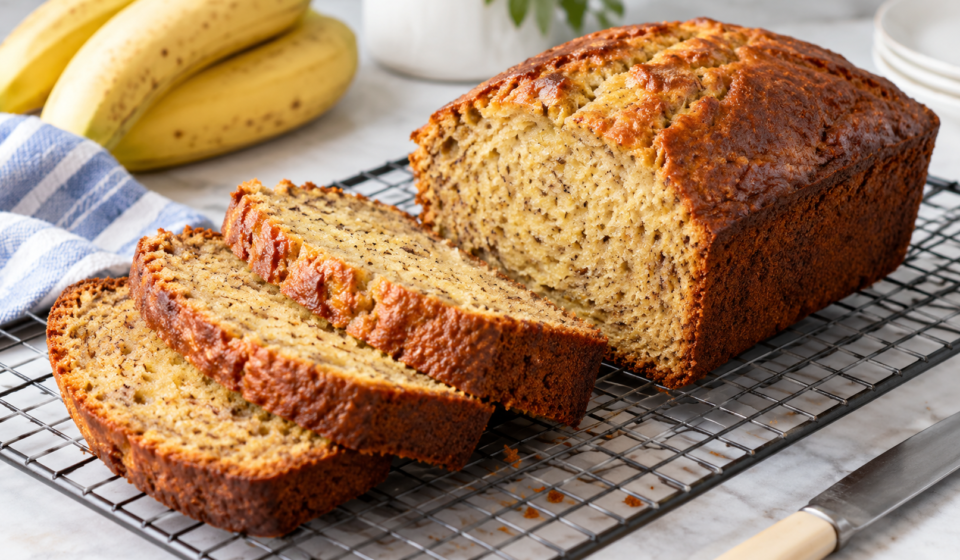

Those blackening bananas on your counter are not rubbish. They are the start of one of the most reliable bakes in British home cooking. Mary Berry banana bread has earned its reputation for a simple reason: it works every time, uses ordinary ingredients, and comes together in a single bowl.
This is the classic version of her banana loaf — the one baked in a 2lb tin, risen high, and sliced thick for afternoon tea. Below you’ll find exactly what makes it work, the full step-by-step method, the mistakes that trip people up, and honest answers to the questions bakers actually ask.
What Is Mary Berry’s Banana Bread?
Mary Berry’s banana bread is a traditional banana loaf made with her trademark all-in-one method: every ingredient goes into the bowl together and gets beaten until smooth. No creaming butter and sugar separately, no folding in stages. The result is a moist, golden loaf with a tender crumb and a gently domed top.
Berry has published a couple of banana loaf variations over the years — including a smaller chocolate-chip version she made for the Great Sport Relief Bake Off — but the classic two-banana loaf remains the one most home bakers return to. It serves 8 to 10, keeps well for days, and freezes beautifully.
Why Her Version Works So Well
Most banana bread recipes fail in one of two ways: they come out dry, or they sink in the middle. Berry’s formula sidesteps both problems with a few deliberate choices.
First, the ratio of banana to flour is generous. Two large ripe bananas in 225g of flour means real banana flavour in every bite, plus natural moisture that keeps the crumb soft for days. Skimp on the fruit and you get a plain sponge that happens to be beige.
Second, she uses self-raising flour plus an extra teaspoon of baking powder. That double lift matters because banana batter is heavy — mashed fruit weighs a mixture down. The extra leavening keeps the loaf light instead of dense.
Third, the all-in-one method is not laziness; it is consistency. When everything is beaten together for the same amount of time, you avoid the uneven mixing that causes tunnels and dense patches.
Ingredients You’ll Need
For one 2lb (900g) loaf:
- 100g butter, softened
- 175g caster sugar
- 2 eggs, beaten
- 2 ripe bananas, mashed
- 225g self-raising flour
- 1 tsp baking powder
- 2 tbsp milk
A note on the bananas: they should be properly ripe — skins streaked with brown, flesh soft and fragrant. Under-ripe bananas give you a bland, stodgy loaf no amount of sugar will fix.
How to Make Mary Berry Banana Bread: Step by Step
1. Heat the oven and prepare the tin. Set the oven to 180°C (160°C fan / Gas 4). Grease a 2lb loaf tin and line it with baking parchment, leaving a little overhang so you can lift the loaf out later.
2. Mash the bananas. Peel the bananas and mash them with a fork in a small bowl. A few small lumps are fine — they melt into the crumb during baking and give little pockets of banana flavour.
3. Combine everything. Tip the mashed banana into a large mixing bowl along with the softened butter, caster sugar, beaten eggs, flour, baking powder and milk. Beat with an electric hand mixer for about two minutes until the mixture is smooth and has lightened slightly in colour.
4. Fill the tin. Spoon the batter into the prepared tin and level the surface with the back of a spoon. Give the tin one gentle tap on the counter to settle out large air bubbles.
5. Bake. Bake for about 1 hour, until the loaf is well risen, golden brown, and shrinking slightly away from the sides of the tin. A skewer pushed into the centre should come out clean.
6. Cool properly. Leave the loaf in the tin for 10 minutes — it is fragile when piping hot — then lift it out onto a wire rack to cool completely. Slicing while warm is tempting, but the crumb needs this time to set or it will compress.
Common Mistakes to Avoid
Opening the oven door early. Banana loaf is unforgiving in the first 40 minutes. Every peek drops the temperature and can make the centre collapse. Trust the timer.
Overbaking. A loaf that bakes five minutes too long turns dry at the edges while looking fine on top. Start checking at 55 minutes; the skewer test does not lie.
Using the wrong tin size. This recipe is built for a 2lb (900g) tin. Cram it into a 1lb tin and the middle will never cook through while the top burns. If you only have the smaller tin, halve the recipe.
Beating the batter too long. Two minutes with an electric mixer is plenty. Overbeating develops the gluten in the flour and gives you a tough, rubbery texture instead of a tender crumb.
Skipping the lining. Banana batter is sugary and sticky. An unlined tin means wrestling the loaf out in pieces. Parchment is non-negotiable.
Expert Tips for the Best Result
Weigh the bananas, don’t count them. “Two bananas” is vague — fruit varies enormously. Aim for roughly 200–230g of peeled banana. Too little and the loaf dries out; too much and it turns gummy.
Room-temperature ingredients mix better. Cold butter won’t cream evenly and cold eggs can make the batter curdle. Set everything out 30 minutes before you start.
Try the chocolate-chip variation. Berry’s BBC version folds 50g of dark chocolate chips through a smaller batter and drizzles the cooled loaf with melted chocolate. It is a genuine upgrade if you are baking for children — or for adults who claim to be baking for children.
Toast the slices. Day-old banana bread, sliced thick and toasted, with salted butter melting into it, is arguably better than the fresh loaf. Day three is the sweet spot.
Double it when bananas pile up. Berry herself suggests doubling the recipe when you have a glut of overripe bananas. The second loaf freezes for up to three months — wrap it tightly in cling film, then foil.
Frequently Asked Questions
Can I freeze Mary Berry banana bread?
Yes. Let the loaf cool completely, then wrap it whole (or in slices) in cling film followed by a layer of foil. It keeps for up to three months. Thaw at room temperature for a few hours; frozen slices can go straight into the toaster.
Why did my banana bread sink in the middle?
The most common causes are underbaking, opening the oven door too early, or too much banana for the flour. Check your oven temperature with an oven thermometer if sinking happens repeatedly — many ovens run cooler than the dial claims.
Can I use frozen bananas?
Absolutely, and they are often ideal because freezing concentrates their sweetness. Thaw them fully first and drain off any excess liquid before mashing, or the extra water will make the batter too wet.
How should I store banana bread?
Keep it in an airtight container at room temperature for up to 4 days. Refrigeration dries it out, so avoid the fridge unless your kitchen is very warm. A paper towel in the container absorbs excess moisture and stops the top going sticky.
Can I reduce the sugar in Mary Berry banana bread?
You can cut the caster sugar to around 125g without structural problems, but expect a less tender crumb and a paler crust — sugar does real work in baking beyond sweetness. Don’t go lower than that, or swap in a sugar substitute without testing, as the texture will suffer.
What makes this different from American-style banana bread?
American versions often use oil instead of butter and add spices like cinnamon. Berry’s loaf is a British butter-based cake: richer in flavour, finer in crumb, and plainer in seasoning so the banana itself does the talking.
My loaf browned too fast on top but is raw inside. What went wrong?
Your oven runs hot, or the loaf sat too high. Move it to a lower shelf and loosely tent the top with foil for the last 20 minutes. That shields the crust while the centre finishes baking.
Final Thoughts
Mary Berry banana bread endures because it respects the home baker: few ingredients, one bowl, no special equipment, and a result that tastes like it took far more effort than it did. Get the bananas properly ripe, don’t rush the bake, and let it cool before slicing — and you’ll have a loaf worth repeating every time those bananas start to spot.